Performance Without Toxicity
Services:
- Exhibition Design
- Production
- Fabrication
How might an exhibition operate as a laboratory of projects in varying states of emergence? How can detoxification be articulated as a spatial and curatorial strategy?
These were the questions that shaped our approach to Performance Without Toxicity.
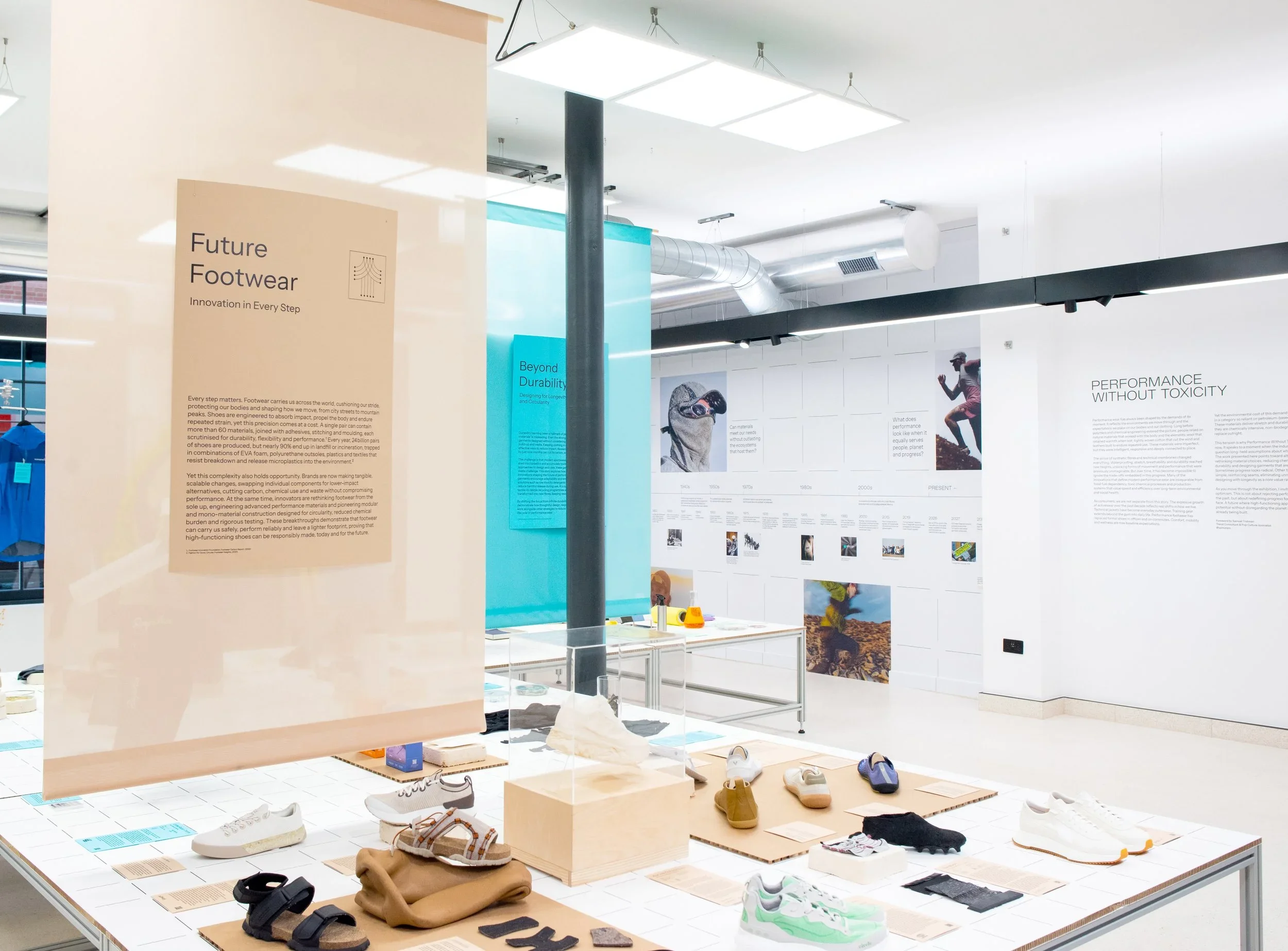
The exhibition brings together 37 projects - spanning speculative research, early-stage start-ups, commercialised innovation and global brands - all exploring what performance wear could look like if it were clean, circular, and regenerative.
Designing a single environment for such a wide range of contributors came with a clear set of priorities. The space needed to feel balanced and readable, built with circularity in mind, and delivered with restraint - without losing the ambition of the work on display.
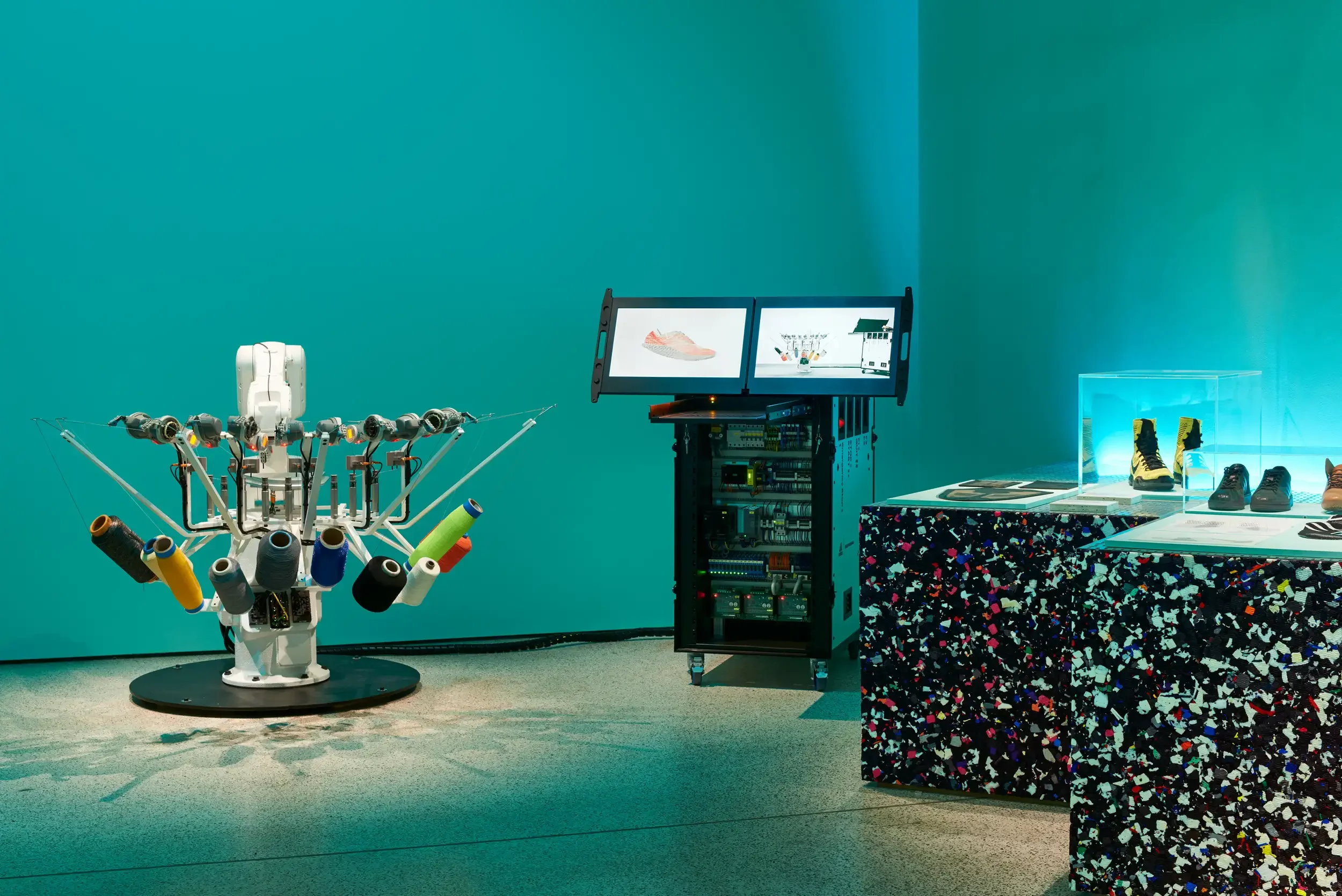
We were selected through a competitive pitch process, drawing on our experience designing exhibitions that translate technical innovation into clear, engaging spatial storytelling - particularly our work on Sneakers Unboxed: Studio to Street at the Design Museum, where we explored how material development can shape the design language of the space itself.
With 37 participating projects spanning speculative research, early-stage start-ups, commercialised innovation and global brands, the key challenge was balance. How do you create a space where every idea feels equally legible, regardless of budget, scale, or stage of development? We wanted the exhibition to feel generous. A space where early-stage research could sit confidently alongside established brands, and where the innovation stayed at the centre.
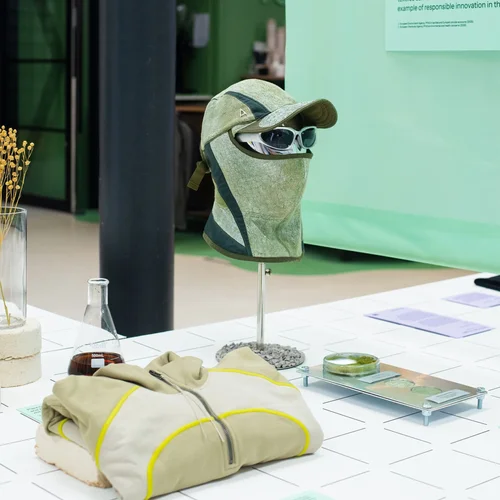
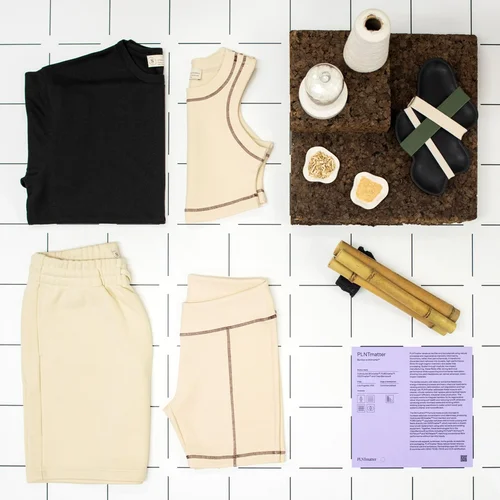
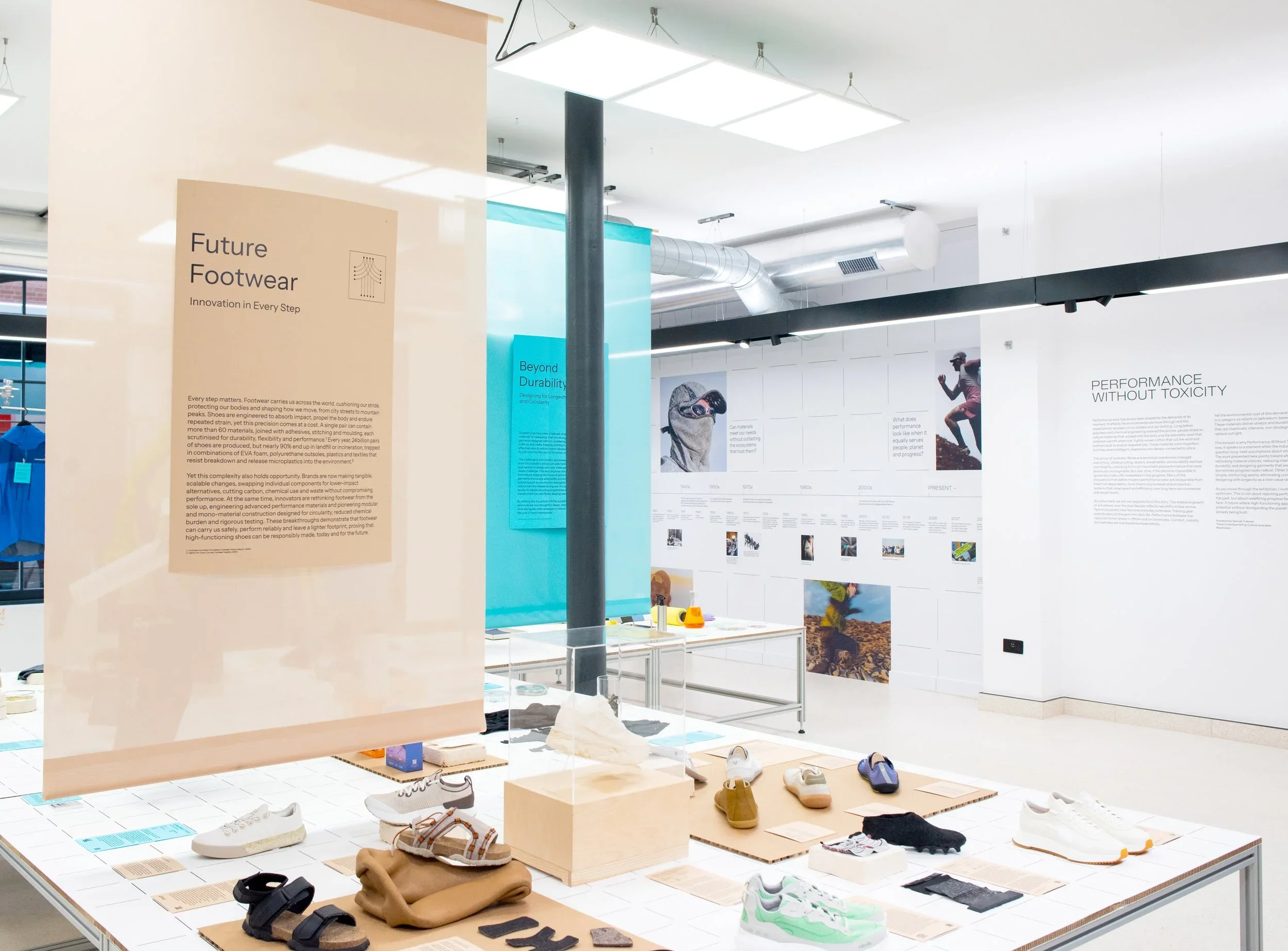
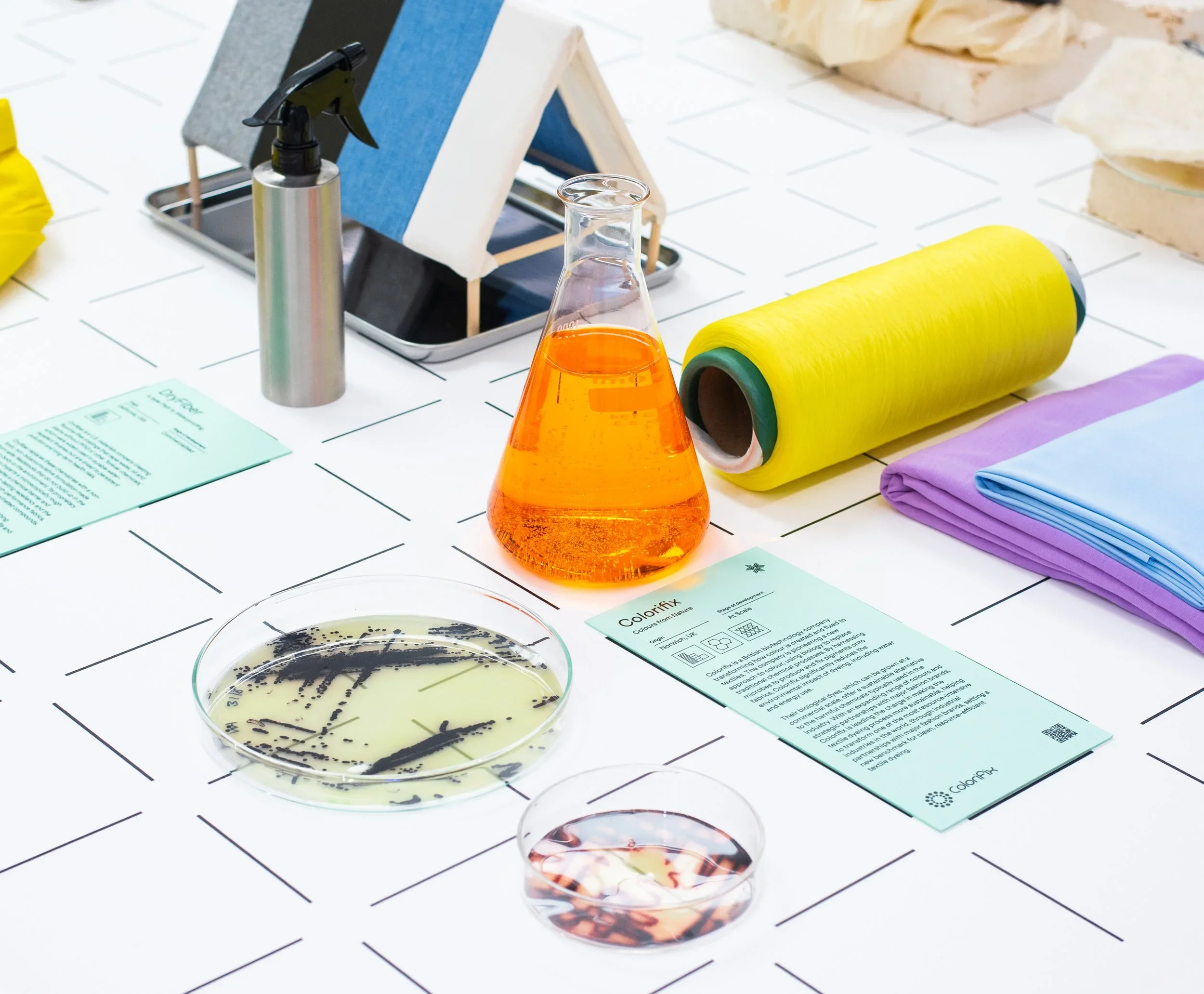
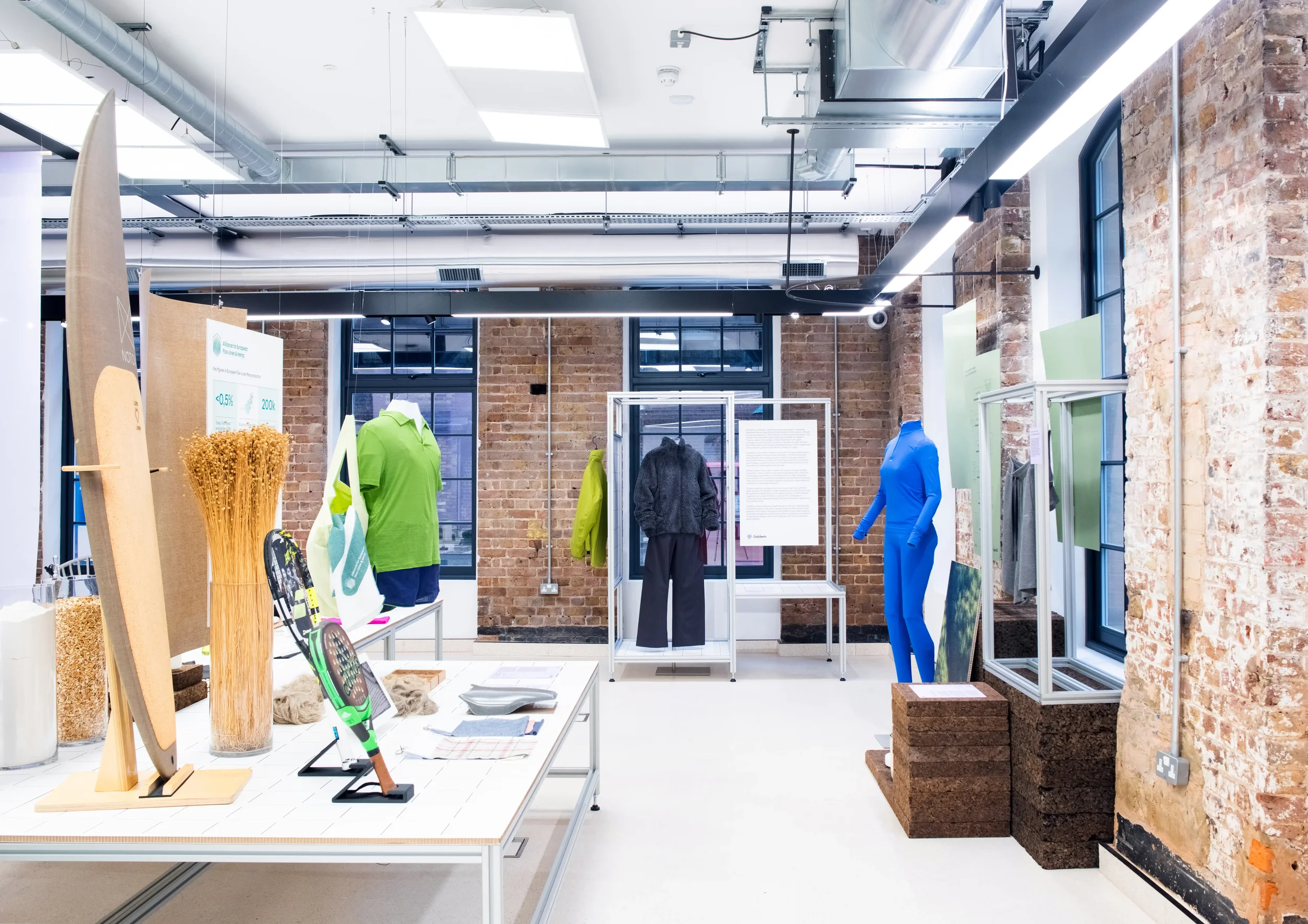
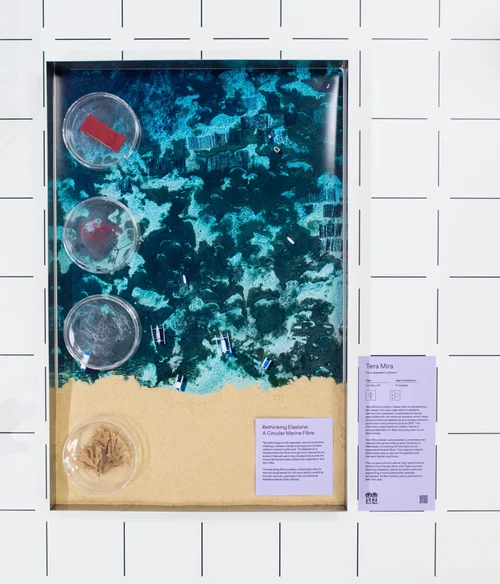
We began by working with what already existed. We mapped The Mills Fabrica’s in-house display resources - including green metal shop fixtures, cork blocks, mycelium blocks and petri dishes - and integrated them into the exhibition wherever possible.
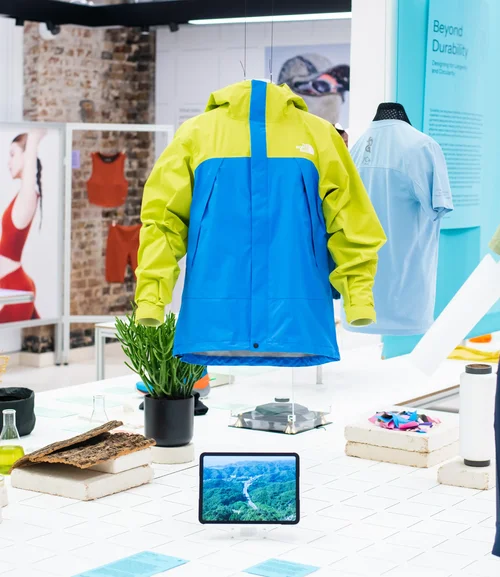
We then introduced a new modular display system centred around a continuous table-plinth running through the gallery. Built from extruded aluminium and topped with printed cardboard panels, it serves as a shared working surface - a reference to the pattern-cutting table, where performance garments begin as material and construction, not marketing. The grid keeps everything readable. It’s subtle, but it creates order - giving each project room to speak, while still feeling like part of one exhibition.
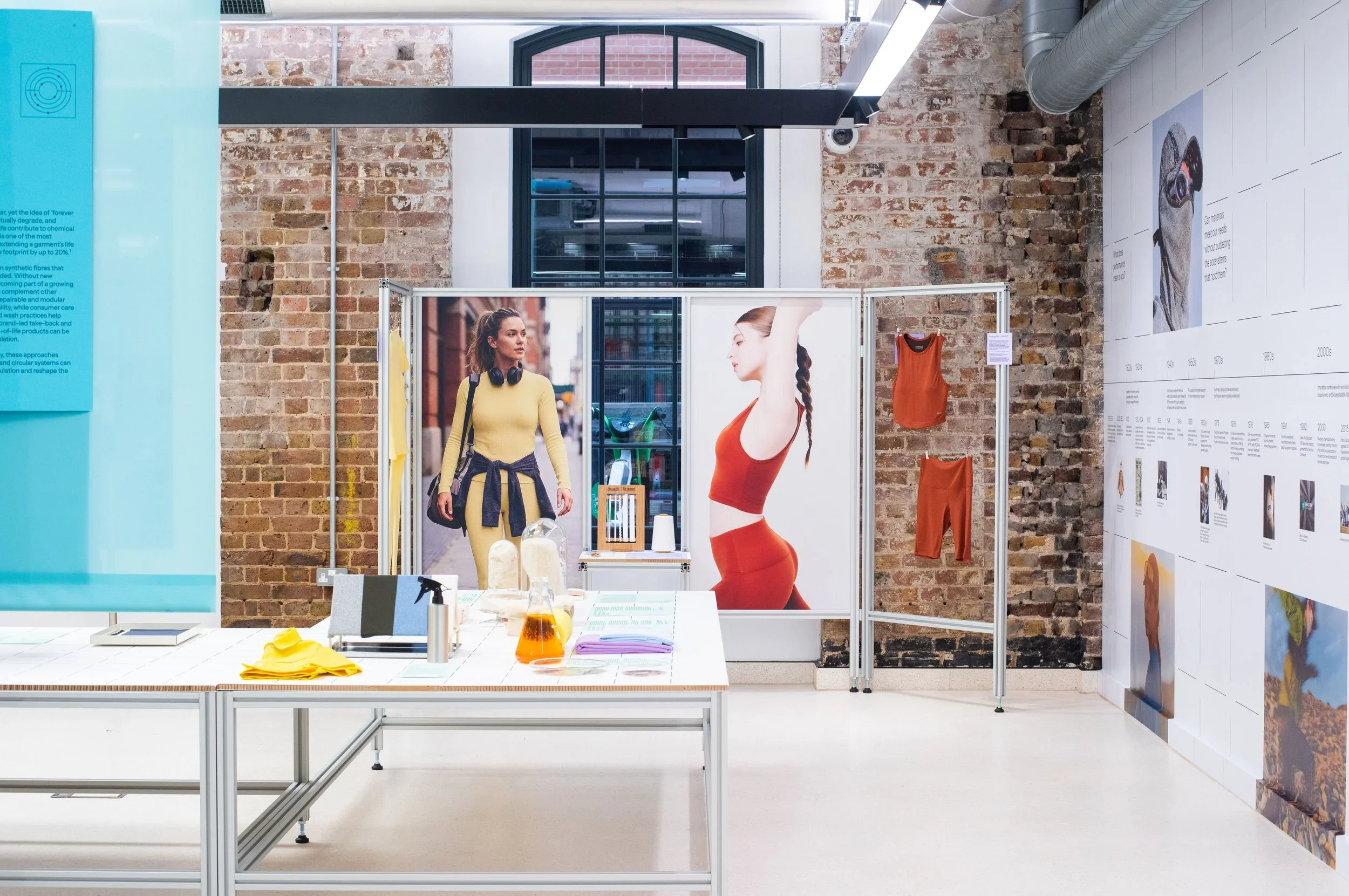
The table structures are fully demountable and designed for reuse. The aluminium is lightweight, robust and easy to assemble, while the cardboard tops can be reused, adapted, or recycled at the end of their life.
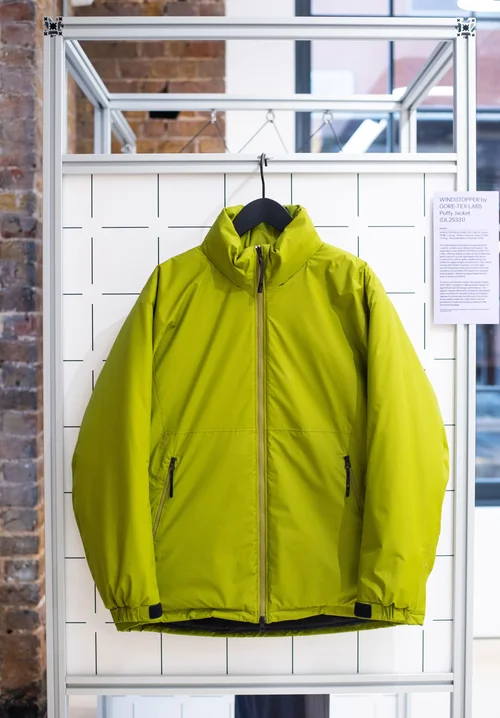
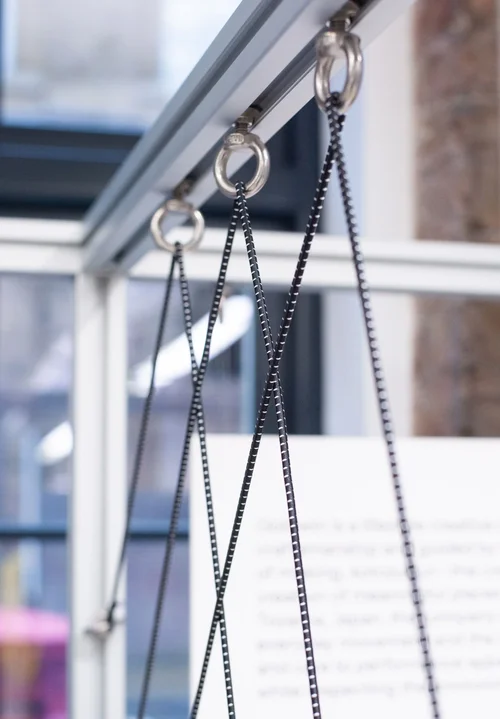
Around the central platform, satellite displays and suspended garments allow visitors to encounter materials at different scales and distances. We also worked directly with exhibitors, offering hands-on support and guidance - from choosing appropriate materials for printed elements to sourcing display accessories that aligned with the environmental values at the heart of the show.
A large-scale graphic wall anchors the space at the back of the room, pulling the exhibition into a wider timeline: how performance materials have evolved, and what needs to change next. Designed by our long-time collaborators Studio LP, who also worked with us on Sneakers Unboxed at the Design Museum, the exhibition is organised into four colour-coded sections. Studio LP also developed a set of symbols used across the wall graphics and object labels, helping visitors navigate the subtle differences between material approaches: bio-based and plant-derived solutions, innovations made from waste, recycled and closed-loop systems, non-toxic low-chemistry developments, among others.
Project details
Curated by: The Mills Fabrica
Exhibition Design & Production and Fabrication: InterestingProjects LTD
2D Graphics: Studio LP
Print: Puck Studio
Technical Support: Marc Morrow
Photography: Calum Barlow
January 2026