Wellcome Photography Prize 2025

Client
Wellcome Trust
Services
Exhibition Design
Production
Holding Space for the Human Story
What does it take to create a space that is both mobile and intimate - a space that can be packed away and reset every week, yet still holds room for powerful human stories? Our work at The Francis Crick Institute began with this challenge.
The Crick’s public gallery is a truly non-traditional exhibition space: a high-ceilinged, curved event hall designed to host conferences, busy with daily footfall, and without a single fixed wall. Our challenge was to transform this dynamic, demanding setting into an emotional anchor for a photography exhibition centred on science, health, connection, and empathy.
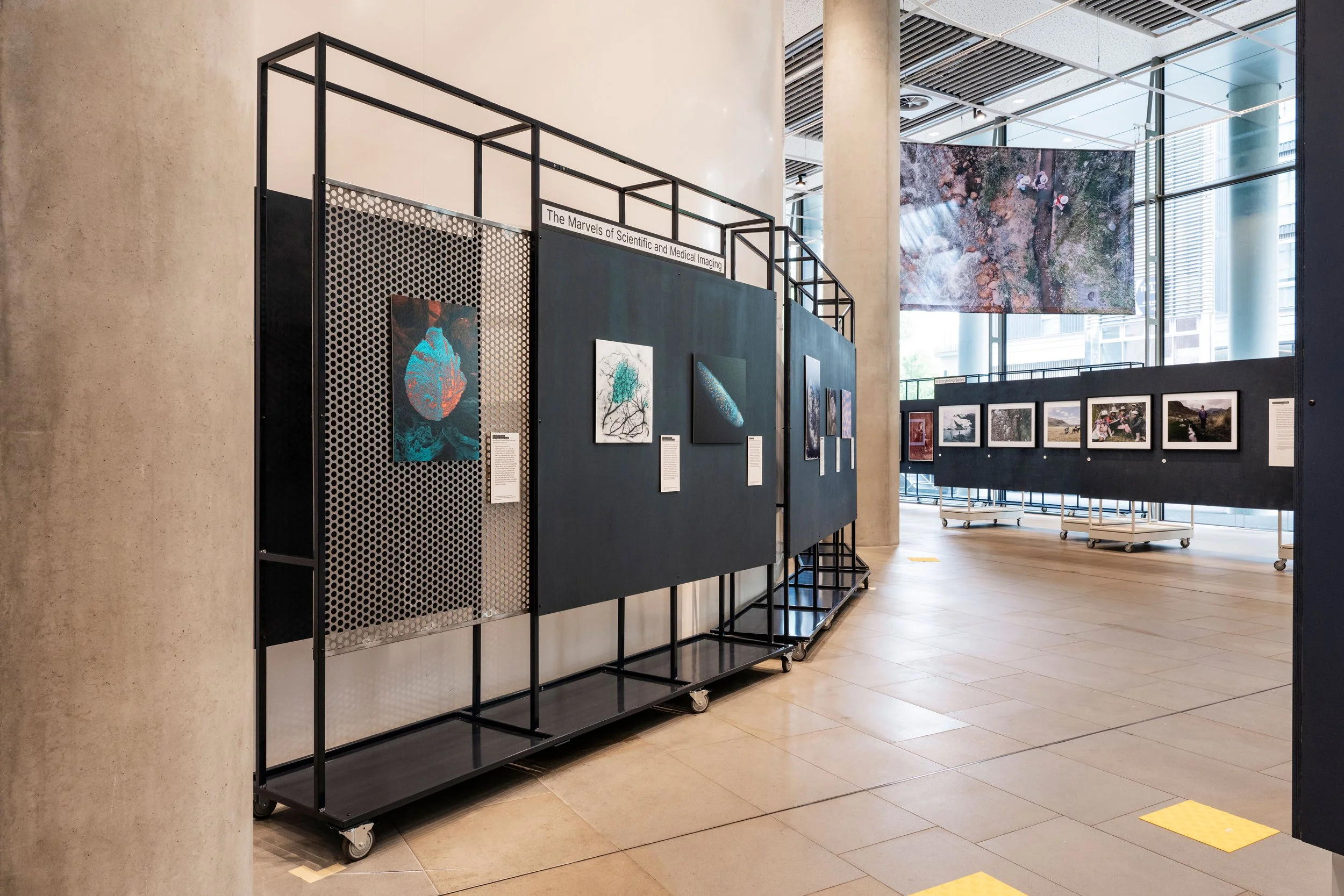
A Strategy of Activation
Our response was a two-part spatial strategy that focused on visual activation and the human scale.
Elevating the Narrative: We activated the architecture’s sheer height, drawing the exhibition visually into the busy, monumental-scale foyer with large-scale prints. This intervention immediately brought the exhibition to the forefront, countering the grand scale to create a more intimate, human-centred experience.
A Mechanism for Change: Below, we designed a series of structures engineered for weekly movement - a mechanism for change, not a fixed solution. These mobile elements anchored the exhibition categories and became guides, gently leading visitors through the emotional landscape of the work. We also designed a dedicated unit at the entrance, ensuring essential resources, such as the British Sign Language introduction and audio guides, were immediately accessible - demonstrating our commitment to human-centred design from the outset.


Extending the Reach of the Story
The Francis Crick building sits in a high-traffic area behind King's Cross station, yet without the welcoming entryway of a conventional museum. Highlighting that the exhibition was Free to access to all became a crucial element of the visitor experience. However, drawing attention in a vast cityscape, competing with stations and the surrounding architecture, was a significant challenge to address.
We solved this by creating an informal, open exterior installation along the building's approach. This intervention offered an alternative to the intimate experience of the interior, extending the exhibition’s presence into the public sphere.
This intervention resulted in over a 50% increase in exhibition footfall, demonstrating the impact of extending the experience beyond the building’s interior and sparking unexpected connections with the broader community. This space for possibility continues to shape how The Francis Crick Institute uses its public space.
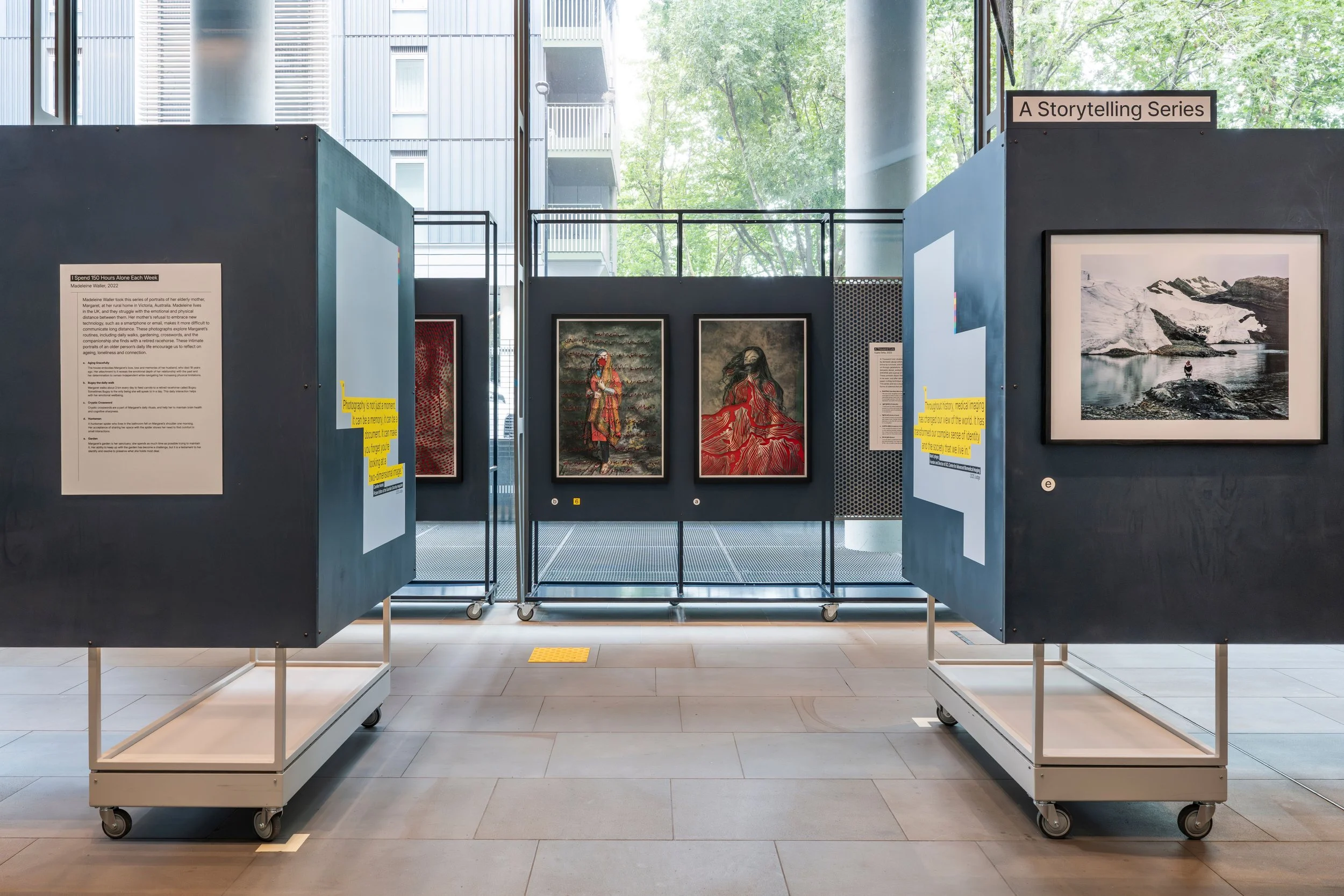
Genuine Circularity: Designing with What Exists
A core constraint in the brief was to integrate existing Francis Crick exhibition structures, which were incompatible with our scale requirements.
This constraint became one of our greatest successes. Through meticulous adaptation, re-engineering, and care, we seamlessly merged these components into our new design language.
The result is genuine circularity: without altering the colour of existing structures, we added wheels and a new base, creating new walls for the exhibition. This approach not only aligned with our sustainability values but also dramatically reduced waste, extended the lifespan of existing resources, and demonstrated that new impact doesn't require building from scratch. The boards were mechanically fixed to create large moving walls and disassembled for reuse at the end of the exhibition.
